RO Water TDS Levels: What's the Ideal Range for Safe Drinking Water?
Discover the ideal TDS level for RO water, what TDS means for drinking water safety, how to test it, and why the right TDS range matters for your health.
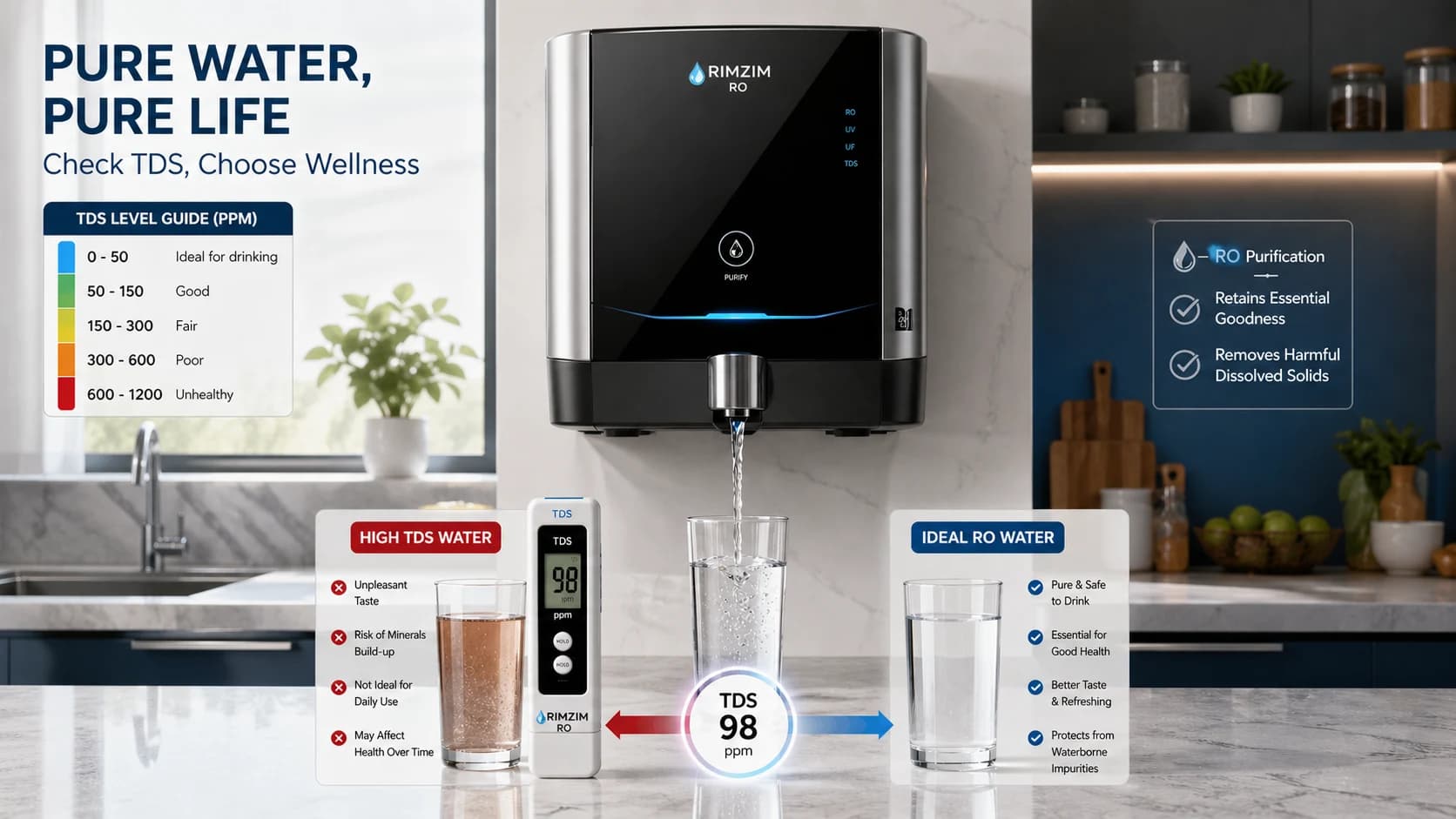
A complete, research-backed guide to understanding TDS in your RO purifier — and why it matters more than you think.
What Is TDS in Water?
TDS stands for Total Dissolved Solids — the total concentration of all dissolved substances in water, measured in milligrams per litre (mg/L), often written as ppm (parts per million).
These dissolved solids include both naturally occurring minerals and potentially harmful contaminants:
- Beneficial minerals: Calcium, magnesium, potassium, sodium
- Harmful contaminants: Lead, arsenic, nitrates, fluoride (in excess), heavy metals
- Other dissolved matter: Chlorides, sulfates, bicarbonates
📌
Quick Fact:
TDS itself doesn't tell you whether water is safe or unsafe — what matters is
what
those dissolved solids are. High TDS from minerals may be acceptable; high TDS from lead or arsenic is dangerous.
TDS is one of the most widely used indicators of water quality in households, industries, and water treatment facilities. Understanding your water's TDS level is the first step toward ensuring your family drinks safe, healthy water.
Ideal TDS Level for RO Drinking Water
| Metric | Value |
|---|---|
| Max TDS allowed (WHO guideline) | 500 mg/L |
| Ideal TDS range for RO water | 50–150 mg/L |
| BIS standard for India (IS 10500) | 500 mg/L |
According to the Bureau of Indian Standards (BIS IS 10500) and the World Health Organization (WHO), the acceptable TDS limit for drinking water is 500 mg/L, with an upper permissible limit of 2,000 mg/L in the absence of a better alternative.
However, for RO-purified water, the sweet spot is typically between 50 and 150 mg/L. This range retains essential minerals while removing harmful contaminants. Most RO purifiers with a TDS controller or mineralizer are designed to maintain this range
The best drinking water isn't the purest — it's water with the right kind of dissolved minerals at the right concentration.
TDS Level Chart: From Dangerous to Excellent
| TDS Level (mg/L or ppm) | Classification | Taste & Suitability | Rating |
|---|---|---|---|
| Below 50 | Ultra-pure / Too low | Flat, tasteless — lacks essential minerals; not recommended for long-term drinking | ⚠️ Caution |
| 50 – 150 | Excellent | Best for health — optimal mineral balance, clean and refreshing taste | ✅ Excellent |
| 150 – 300 | Good | Good mineral content, pleasant taste — ideal if source minerals are beneficial | ✅ Good |
| 300 – 500 | Acceptable | Within permissible limits — slightly harder taste, usable but not ideal | 🟡 Acceptable |
| 500 – 900 | Poor | Above WHO/BIS guidelines — noticeable salty or metallic taste; potential health risk | 🟠 Poor |
| 900 – 1200 | Very Poor | Unpleasant taste, digestive issues possible; requires treatment | 🔴 Very Poor |
| Above 1200 | Unacceptable | Unsafe for drinking — strongly correlated with harmful contaminant levels | 🔴 Unsafe |
How TDS Levels Affect Your Health
TDS is more than a number — it has direct implications for your day-to-day health and long-term wellbeing.
When TDS Is Too High (Above 500 mg/L)
⚠️
Health Risks of High TDS:
Consuming water with excessively high TDS — especially from heavy metals like lead, arsenic, and nitrates — can cause serious health issues including kidney damage, cardiovascular problems, and in children, developmental issues.
High TDS water may also lead to:
- Bitter, salty, or metallic taste — reducing daily water intake
- Limescale buildup in appliances and pipes
- Digestive discomfort and gastrointestinal irritation
- Increased risk of kidney stones (from excess calcium/sulfates)
When TDS Is Too Low (Below 50 mg/L)
⚠️
Risks of Ultra-Low TDS Water:
Drinking water with very low TDS (below 50 mg/L) over time can leach essential minerals from the body, potentially leading to mineral deficiencies including low calcium and magnesium levels.
The WHO notes that water very low in dissolved minerals may contribute to an increased risk of cardiovascular disease, motor neuronal diseases, and weakened bone density over long periods of consumption.
The Optimal Range (50–150 mg/L)
✅
Benefits of Ideal TDS:
Water in the 50–150 mg/L range has the right balance of minerals, is palatable, hydrating, and supports good metabolism. It's the gold standard for RO-purified drinking water.
How to Test TDS at Home
Testing your water's TDS is quick, easy, and affordable. Here's how:
Using a TDS Meter (Most Common Method)
- Purchase a digital TDS meter (available for ₹300–₹800 online)
- Fill a clean glass with the water you want to test
- Turn on the TDS meter and submerge the probes ~2cm into the water
- Wait 10–15 seconds for a stable reading
- Note the reading in ppm (same as mg/L for practical purposes)
- Rinse the probes with distilled water after use
💡
Pro Tip:
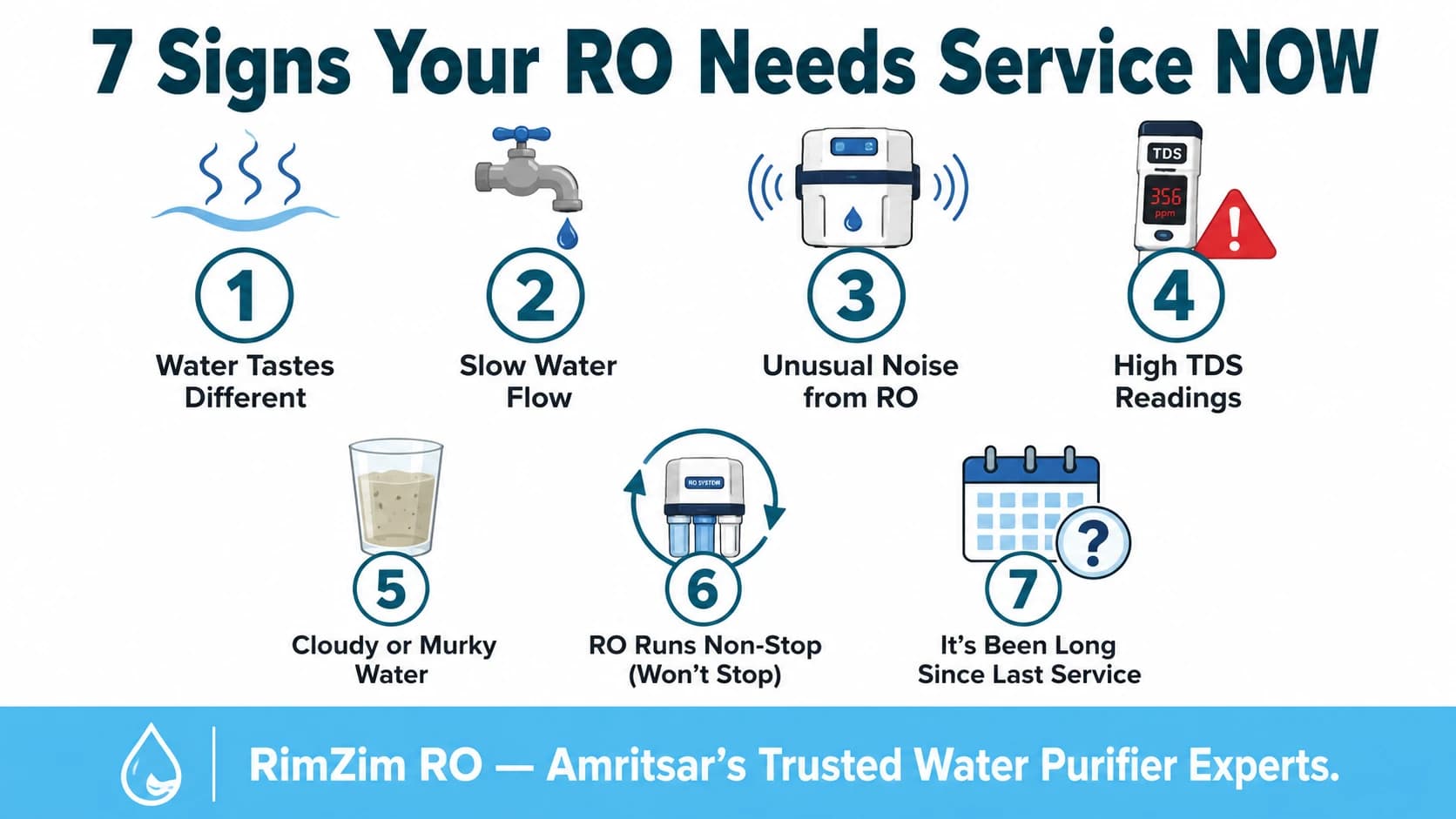
Test your RO water TDS at least once a month. A rising TDS reading from your RO output is one of the first signs that your RO membrane needs replacement.
Other Testing Methods
While less common for home use, water can also be tested using laboratory water analysis (more detailed, gives specific ion breakdown) or TDS test strips (less accurate but faster). For the most precise results — especially if you suspect contamination — a certified lab test is recommended.
How RO Purifiers Reduce TDS
Reverse Osmosis (RO) is the most effective water purification technology for reducing TDS. Here's how the process works:
The RO Purification Process
- Pre-sediment filter: Removes large particles, dust, and rust
- Activated carbon filter: Removes chlorine, pesticides, bad odour
- RO membrane (0.0001 micron): The heart of the system — removes dissolved salts, heavy metals, bacteria, and viruses
- TDS controller / Mineralizer: Adds back essential minerals (Ca, Mg) to bring TDS to an ideal range
- UV/UF stage (optional): Kills remaining bacteria and viruses
- Post-carbon polishing filter: Final taste enhancement
A good RO purifier can reduce TDS by 90–95%. For example, tap water with a TDS of 800 mg/L can be purified down to 40–80 mg/L. A TDS controller then blends a controlled amount of unfiltered water to bring it back to the 50–150 mg/L ideal range.
Can TDS Be Too Low? The Problem with Over-Purified Water
Many people assume the lower the TDS, the purer and healthier the water. This is a common misconception.
RO water with TDS below 50 mg/L is stripped of nearly all minerals — including beneficial calcium and magnesium. Drinking such water consistently may result in:
- Electrolyte imbalance
- Reduced mineral absorption from food
- Flat, unpalatable taste discouraging adequate hydration
- Long-term risk of mineral deficiency
This is why modern RO purifiers come with a TDS controller or mineralizer — to ensure the output doesn't fall below safe mineral levels.
📌
Bottom Line:
Zero TDS does not mean zero harm. The WHO recommends that drinking water should contain a minimum TDS of around 100 mg/L for optimal health benefits.
Tips to Maintain the Right TDS in Your RO Water
- ✅ Test your RO output TDS monthly using a digital TDS meter
- ✅ Replace your RO membrane every 12–18 months (or as recommended)
- ✅ Service pre-filters (sediment + carbon) every 6 months
- ✅ Ensure your TDS controller is properly calibrated after every service
- ✅ If TDS rises above 150 mg/L from the RO output, schedule a service immediately
- ✅ Use a reputable RO brand with a built-in mineralizer for long-term mineral balance
- ✅ If your tap water TDS exceeds 1,000 mg/L, consider a two-pass RO system
- ✅ Keep the storage tank clean to prevent bacterial growth
Conclusion
Understanding TDS levels in your RO water is key to ensuring that what you drink is both safe and nutritionally appropriate. The ideal range of 50–150 mg/L balances purity with essential mineral content — giving your family the healthiest possible drinking water.
Invest in a quality TDS meter, test your water regularly, and maintain your RO purifier with timely servicing. Small steps in monitoring water quality can lead to significant long-term health benefits.
✅
Summary:
Aim for 50–150 mg/L in your RO output. Test monthly. Replace the membrane every 12–18 months. And always use a purifier with a TDS controller or mineralizer to maintain the right mineral balance.
Disclaimer: This article is for informational purposes only. For concerns about water quality or health, consult a certified water quality expert or medical professional.
Frequently Asked Questions
Article Insights & FAQs
More Insights
View All Stories
Need Expert Help?
Our certified technicians are ready to service your RO system and ensure pure water for your family.