5 Warning Signs Your RO Membrane Needs Immediate Replacement
Is your RO purifier producing bad-tasting or slow water? Discover 5 critical warning signs that your RO membrane needs immediate replacement — and when to call a professional in Amritsar.
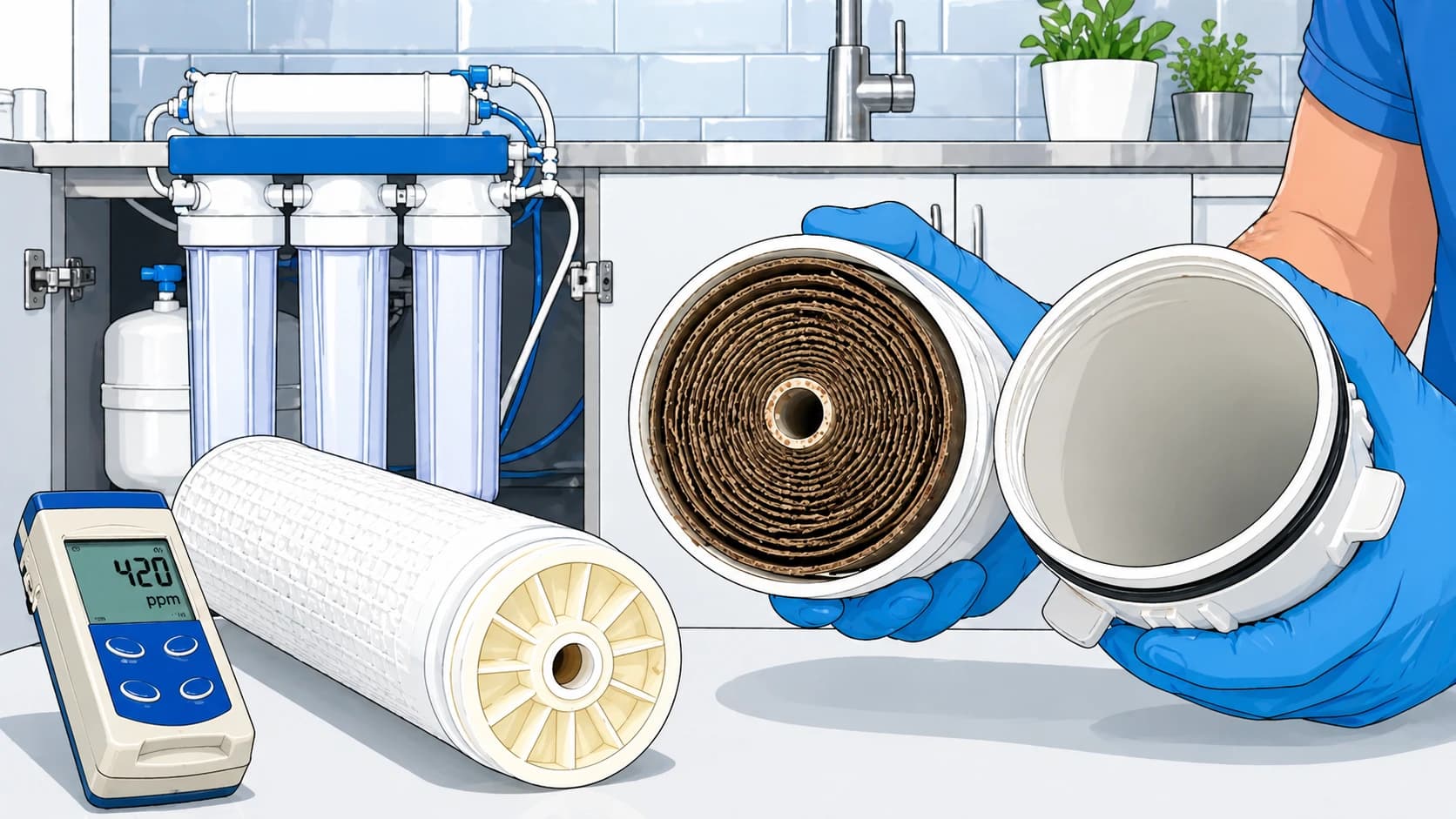
TL;DR: Your RO membrane is the single most critical part of your water purifier. When it degrades, it stops removing dissolved heavy metals, fluorides, and harmful TDS from your drinking water — often without any visible warning. The five most reliable signs of a failing membrane are: a sudden rise in purified water TDS, drastically reduced flow rate, foul taste or odour, visible discolouration, and a membrane that is over two years old without inspection. If you notice even one of these signs, act immediately
What Is an RO Membrane, and Why Is It So Important?
An RO (Reverse Osmosis) membrane is a semi-permeable barrier that removes up to 99% of dissolved impurities from your drinking water — including heavy metals like lead and arsenic, nitrates, fluorides, and harmful Total Dissolved Solids (TDS) — by pushing water through microscopic pores under pressure.
Every other stage in your purifier — the sediment pre-filter, the activated carbon block, the UV lamp — exists to protect and support the membrane. The membrane is doing the actual, life-critical work of purification.
According to the World Health Organization (WHO), long-term exposure to elevated heavy metals and dissolved contaminants in drinking water is a leading cause of kidney damage, developmental issues in children, and neurological disease in South Asian households. In cities like Amritsar, where municipal water TDS regularly exceeds 400–700 ppm due to agricultural runoff and ageing distribution pipelines, the RO membrane is your last line of defence.
When that membrane degrades, your water looks clean. But it no longer is.
How Long Does an RO Membrane Typically Last?
Most residential RO membranes carry a manufacturer recommendation of 2 to 3 years. However, real-world lifespan is highly variable and depends on several factors:
| Factor | Effect on Membrane Life |
|---|---|
| Source water TDS above 500 ppm | Can reduce life to 12–18 months |
| Hard water (high calcium/magnesium) | Causes mineral scaling; shortens life 30–40% |
| Irregular pre-filter servicing | Exposes membrane to sediment and chlorine |
| High daily purification volume | Accelerates physical wear on membrane pores |
| Brand and membrane grade | Premium membranes outlast budget alternatives |
This is why a professional RO maintenance check every 12 months is not a luxury — it is the only reliable way to know whether your membrane is still protecting your family before it fails completely.
5 Warning Signs Your RO Membrane Needs Immediate Replacement
Sign 1: Purified Water TDS Has Risen Suddenly
This is the single most objective and measurable indicator of membrane failure.
A healthy RO membrane should reduce your source water TDS by 85 to 95 percent. If your tap water reads 450 ppm on a TDS meter, your purified output should be between 22 and 68 ppm — well within the safe and optimal range. The Bureau of Indian Standards (BIS IS 10500:2012) considers drinking water with TDS below 500 ppm acceptable, but recommends below 300 ppm for optimal health.
When the membrane's rejection rate collapses, your purified water TDS climbs toward your input TDS. This means the dissolved impurities you bought the purifier to remove are now flowing directly into your glass.
How to test it yourself: A pocket TDS meter costs between ₹200 and ₹500 online. Test your purified water from the RO tap directly. If your reading is above 150–200 ppm — or significantly closer to your source water reading than usual — your membrane is likely failing and needs immediate attention.
If your TDS has already climbed above 300 ppm, stop using the purifier for drinking water until a technician has inspected it, and book a filter and membrane replacement service as soon as possible.
Sign 2: Water Flow Rate Has Dropped Noticeably
A standard residential RO system fills a 6–8 litre storage tank in roughly 1.5 to 3 hours under normal operating pressure. If you are waiting 5 to 6 hours or more for your tank to fill — or if the purifier tap produces only a slow trickle — the membrane is very likely fouled, scaled, or physically degraded.
Three mechanisms cause this:
- Biofilm fouling: Microbial colonies establish themselves on the membrane surface over years of use, blocking water passage.
- Mineral scaling: Hard water deposits calcium carbonate and magnesium sulphate directly onto membrane pores, physically clogging them.
- Sediment breakthrough: If your sediment pre-filter has not been changed on schedule, fine particles reach and permanently damage the membrane surface.
It is worth noting that a low-pressure pump or a failed pre-filter can also cause slow flow. However, if you have recently changed your pre-filters and flow remains sluggish, the membrane is the primary suspect. A trained RO repair technician can accurately diagnose the root cause within a single visit.
Sign 3: Foul Taste, Odour, or Discolouration
Your senses are a powerful diagnostic tool. When purified water develops an unusual taste or smell, something is seriously wrong — and you should not continue drinking it until the system has been inspected.
Here is what specific symptoms typically indicate:
- Metallic or bitter taste — Collapsed TDS rejection; dissolved heavy metals are now passing into your drinking water
- Chlorine or chemical smell — Exhausted carbon post-filter, or membrane failure allowing chemical contaminants through
- Earthy or musty odour — Bacterial contamination from membrane fouling or a failed UV stage allowing microbial growth post-filtration
- Yellow or brownish tint — Iron or sediment breakthrough, indicating complete membrane failure or a ruptured housing
A foul taste or visible discolouration means contamination is happening right now at potentially unsafe levels. Do not wait for the next scheduled service. Book an emergency RO repair and switch to bottled water immediately.
Sign 4: The Drain Line Is Running Constantly
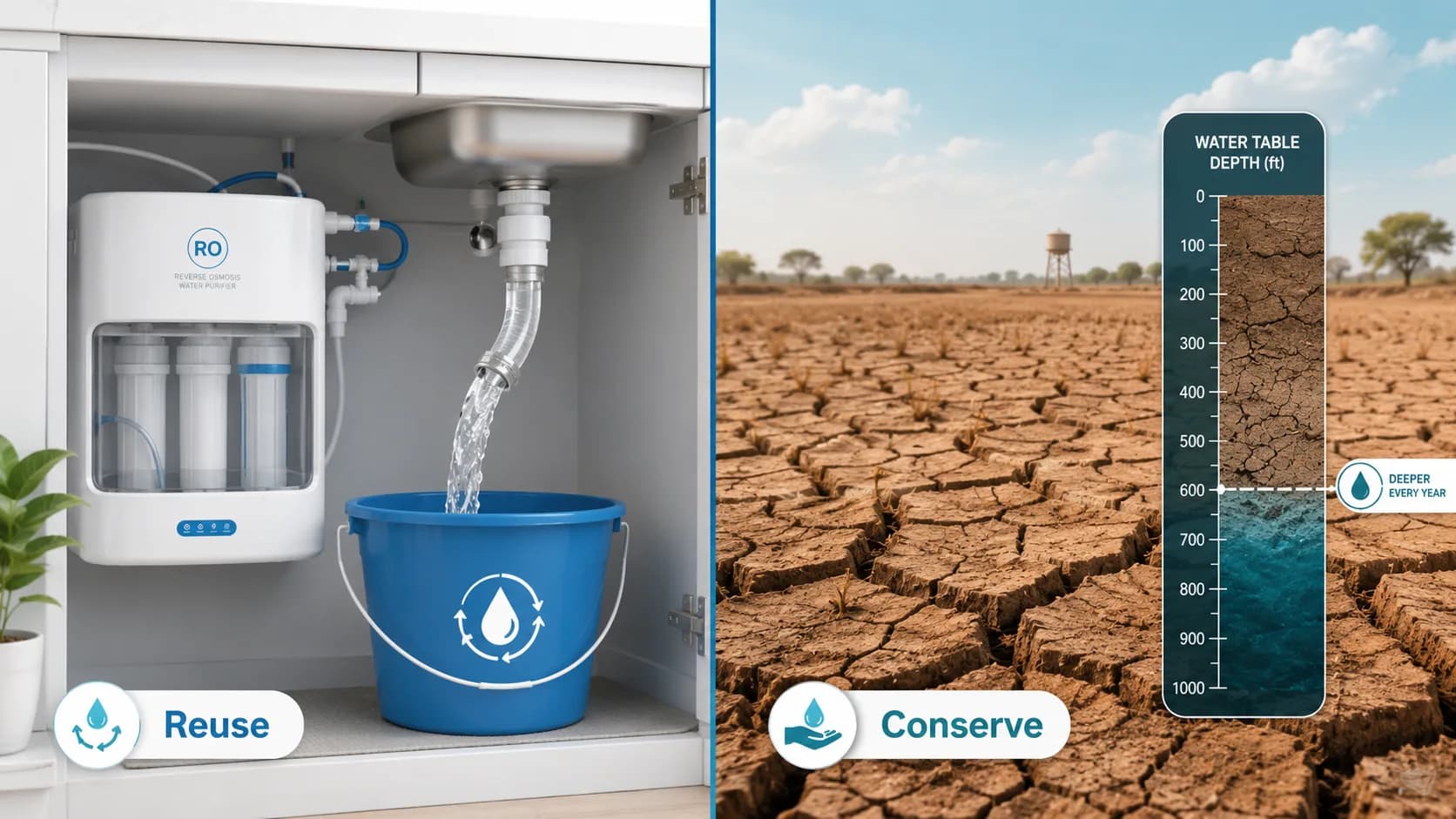
Reverse osmosis is not 100% water-efficient by design. For every litre of purified water your system produces, it discards approximately 2 to 3 litres of concentrate (reject water) down the drain. This gives a normal recovery rate of 25 to 35 percent, and your drain line should only run actively when the system is purifying water to fill the tank.
The sign to watch for: If your drain line is producing a constant, steady stream of water even when the storage tank is full and no water is being drawn — especially if this happens overnight — your membrane has likely developed micro-cracks or pinholes.
A damaged membrane cannot maintain adequate pressure, so the system runs continuously in a futile attempt to produce purified water. Meanwhile, your water bill climbs and the membrane continues to degrade further.
How to check: Disconnect the drain line briefly and place a cup beneath it while the RO system is in its idle state (tank full, no tap open). There should be zero flow. If water continues to drip or flow steadily, call a technician the same day.
Unaddressed, this condition can turn a ₹2,500 membrane replacement into a ₹6,000–₹8,000 pump and housing repair. Protect your investment with a scheduled annual maintenance contract that catches these failures before they escalate.
Sign 5: Your Membrane Is Over Two Years Old Without an Inspection
This is the most dangerous warning sign of all — precisely because it produces no visible or tasteable symptoms until the membrane has already failed significantly.
Even if your RO water tastes perfectly fine and the flow rate seems normal, a membrane that is 2 to 3 years old and has never been professionally tested may be:
- Passing contaminants at low but chronically harmful concentrations
- One spike in source water TDS (such as from a pipe burst or municipal flush) away from complete failure
- Sustaining a biofilm layer that is slowly introducing bacteria into your otherwise-filtered water supply
The BIS IS 10500:2012 standard recommends annual inspection of all household water purification equipment. Most RO manufacturers also void product warranties if servicing intervals exceed 12 months.
If you cannot remember the last time a technician looked at your purifier, that is your answer. Book a service visit today, confirm the current state of your membrane, and get a professional TDS verification done before assuming everything is fine.
DIY Membrane Replacement vs. Professional Service: Which Should You Choose?
| DIY Replacement | Professional Service (RimZim RO) | |
|---|---|---|
| Part cost | ₹800 – ₹2,500 | Included in service price |
| Total cost | ₹800 – ₹2,500 (parts only) | ₹1,200 – ₹3,500 (all-inclusive) |
| Time required | 2 – 3 hours | 45 – 90 minutes |
| TDS verification after install | Rarely performed | Always performed |
| Risk of leaks from improper fitting | High without experience | Near-zero |
| Post-flush procedure | Often skipped | Always completed |
| Warranty on new membrane | Depends on vendor | Included |
Unless you have prior plumbing experience and the right tools, DIY membrane replacement carries a meaningful risk: improper fitting causes slow leaks inside your under-sink cabinet, and skipping the post-installation TDS verification means you have no confirmation that the new membrane is actually functioning correctly.
Our RO maintenance service includes complete membrane installation, pressure testing, TDS verification before and after, and a 30-day service warranty on parts and labour.
How to Extend the Life of Your New RO Membrane
After a membrane replacement, protect your investment with these habits:
- Replace sediment and carbon pre-filters every 6 months. Chlorine and sediment are the membrane's two biggest enemies. Healthy pre-filters absorb both.
- Install a TDS controller if your source water exceeds 300 ppm, to reduce the concentration load on the membrane.
- Schedule a professional annual check. A trained technician catches scaling and biofilm long before they cause measurable damage.
- Flush the system before first use. Run the first two full tank-fills to drain to clear manufacturing residues from the new membrane.
- Run your purifier regularly. If the system sits idle for more than a week, stagnant water in the membrane promotes microbial growth. Run it for a few minutes every 2–3 days during low-usage periods.
Ready to take action?
- Book a professional RO service in Amritsar — available 7 days a week
- Explore our Annual Maintenance Contract plans — starting at ₹999/year
- Browse genuine RO filters and membranes — OEM-compatible, fairly priced
References
- World Health Organization — Guidelines for Drinking-water Quality, 4th Edition
- U.S. Environmental Protection Agency (EPA) — Point-of-Use Reverse Osmosis Systems
- Water Quality Association (WQA) — Consumer Water Treatment Resources
- Bureau of Indian Standards — IS 10500:2012 — Drinking Water Specification
- Central Ground Water Board, India — CGWB Official Portal — Water Quality Data
Frequently Asked Questions
Article Insights & FAQs
More Insights
View All Stories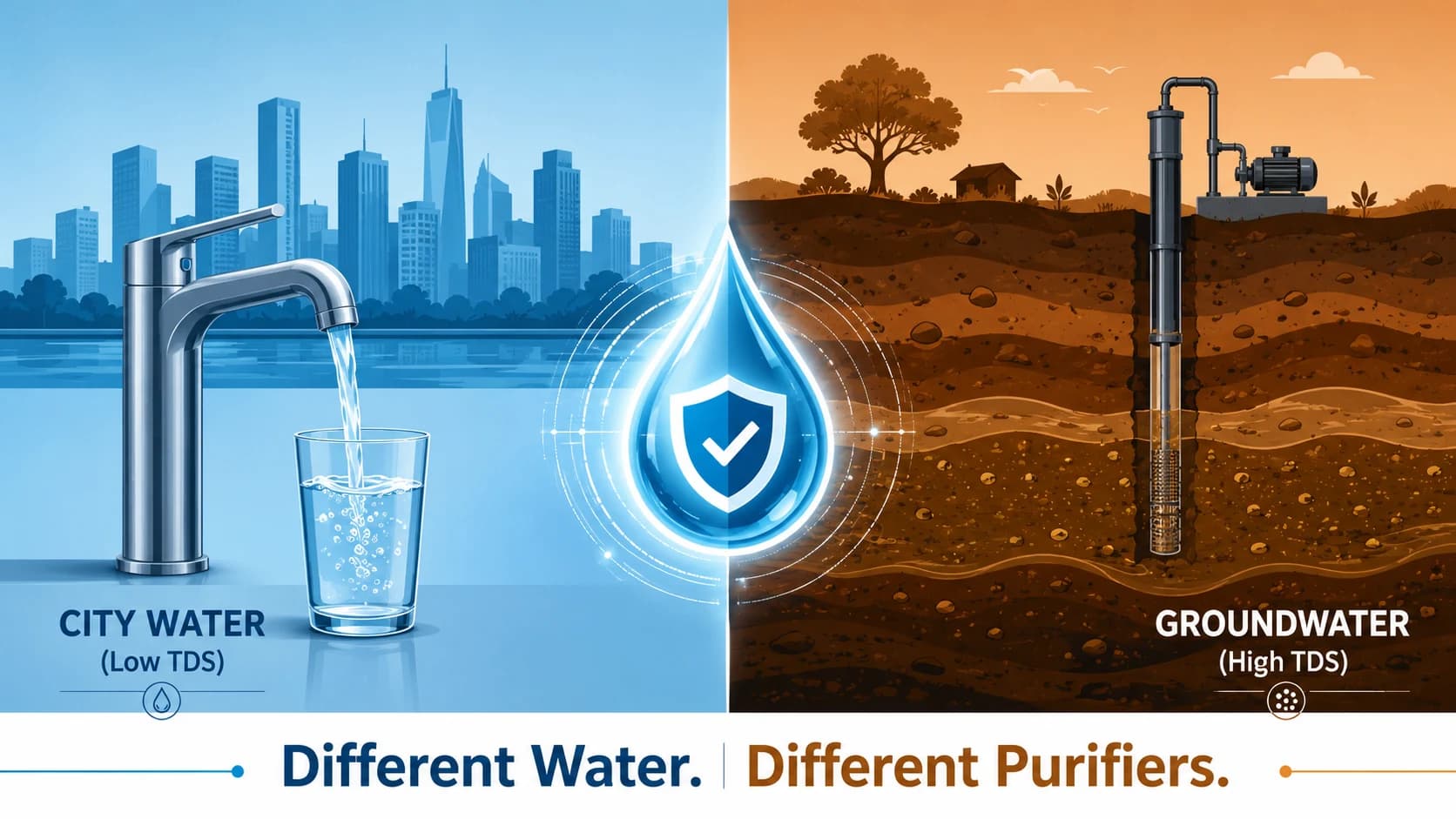
Need Expert Help?
Our certified technicians are ready to service your RO system and ensure pure water for your family.