City Tap Water vs. Groundwater: Are You Using the Wrong Water Purifier?
Buying a water purifier shouldn't be guesswork. Learn why using an expensive RO system on municipal city water might be a mistake, when groundwater requires it, and how the 300 PPM rule decides everything.
TL;DR:
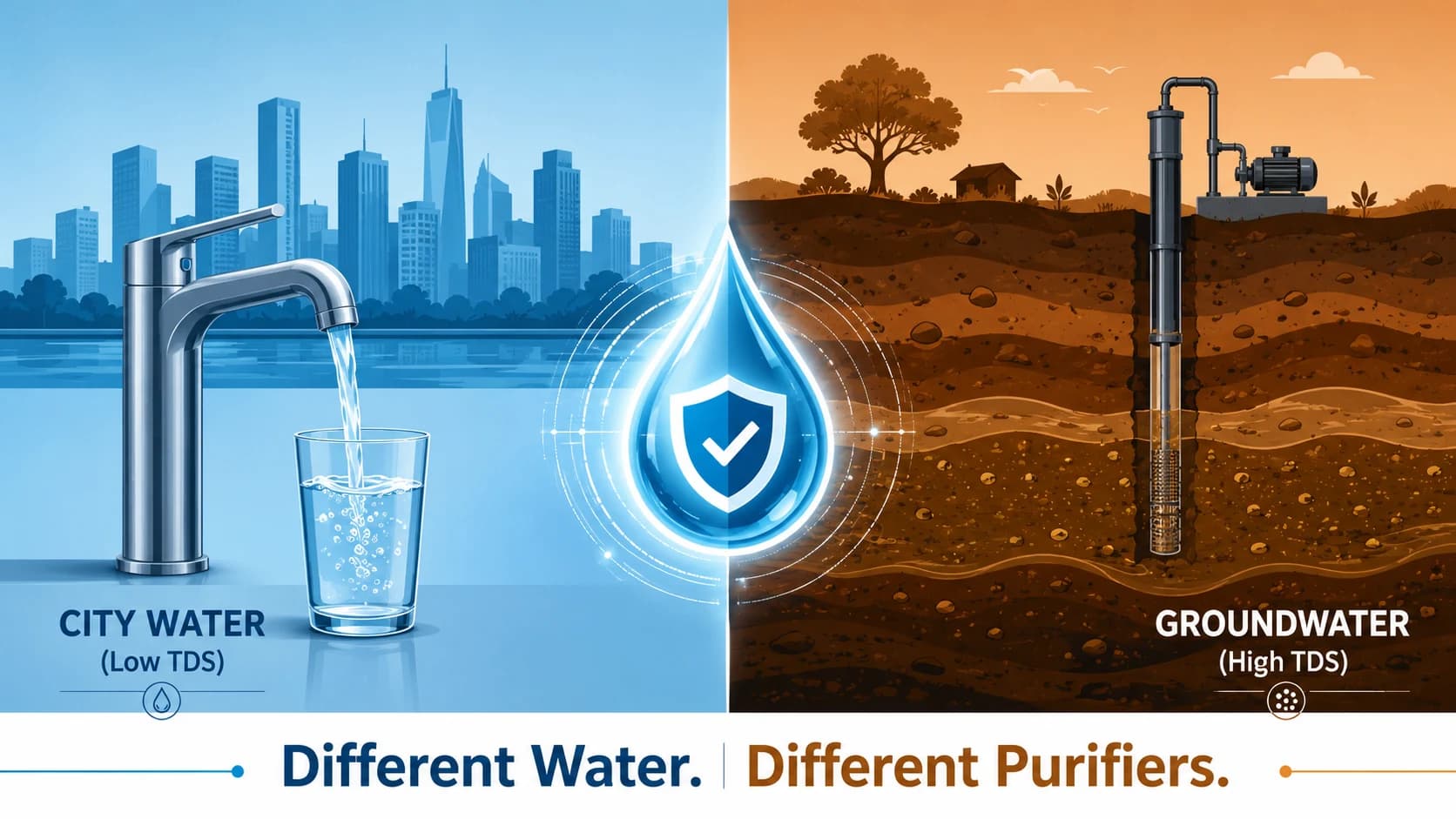
You do not automatically need a Reverse Osmosis (RO) purifier just because you want clean drinking water. If you receive treated municipal city water with a Total Dissolved Solids (TDS) level below 300 PPM, a UV/UF purifier is safer, cheaper, and retains essential healthy minerals without wasting water. However, if you rely on private wells, borewells, or groundwater with a TDS above 500 PPM, an RO system is absolutely mandatory to remove heavy metals, excess salts, and chemical contaminants. The right choice depends entirely on your water source, not the price tag of the machine.
Why "One Size Fits All" Fails in Water Purification
A water purifier is not a magic box that universally makes all water perfect. It is a specific tool designed to solve specific chemical and biological problems.
The most common mistake homeowners make is buying the most expensive RO (Reverse Osmosis) system available, assuming higher price equals better health. In reality, applying heavy-duty RO filtration to already-soft city water can strip away vital calcium and magnesium, leaving the water acidic and tasteless. Conversely, relying on a basic carbon filter for deep-well groundwater leaves you exposed to dangerous heavy metals.
To buy the right purifier, you must first understand the water flowing through your pipes.
The Golden Rule of Purification: The 300 PPM Threshold
The deciding factor for any water purifier purchase is your water's Total Dissolved Solids (TDS). TDS measures the concentration of dissolved minerals, salts, and metals in your water, expressed in Parts Per Million (PPM).
You can test this in seconds using a cheap digital TDS meter.
| Your TDS Reading | Water Source Type | The Purifier You Need |
|---|---|---|
| Under 200 PPM | Excellent City / Municipal Water | UV + UF Purifier |
| 200 – 500 PPM | Average City Water / Mixed Supply | UV + UF or RO with TDS Controller |
| Above 500 PPM | Groundwater / Well Water | RO Purifier (Mandatory) |
Scenario A: You Have Municipal City Water (Tap Water)
Municipal water authorities treat water at massive centralized plants. They filter out heavy sediment, balance the pH, and add chlorine or chloramine to kill biological pathogens (bacteria and viruses) before pumping it to your home.
By the time it reaches your tap, city water generally has a low TDS (under 300 PPM) but may contain residual chlorine, rust from aging city pipes, and microplastics.
Why an RO Purifier Might Be a Mistake Here
RO membranes are designed to aggressively strip out dissolved solids. If your water already has low dissolved solids, the RO membrane will remove the healthy, naturally occurring calcium and magnesium your body needs. Furthermore, RO systems waste up to 3 litres of water for every 1 litre they purify. Wasting water to remove minerals you actually want to keep is highly inefficient.
The Best Solution: UV + UF Filtration
For city water, you need a system that removes pipe rust, filters out chlorine taste, and provides a final failsafe against bacteria—without touching the healthy minerals. When comparing RO vs. UV vs. UF water purifiers, city water is exactly where UV and UF technologies excel because they do not require a heavy-duty membrane.
- UF (Ultrafiltration): A microscopic mesh that physically blocks rust, mud, and cysts.
- Activated Carbon: Absorbs residual chlorine, bad odours, and chemical byproducts.
- UV (Ultraviolet): Neutralizes any bacteria or viruses that survived the journey from the treatment plant.
Scenario B: You Have Groundwater (Borewell / Deep Well Water)
If your home draws water directly from the ground via a private well or borehole, you are drinking raw, untreated water. Groundwater absorbs everything it touches as it seeps through the earth.
This water typically has a high TDS (often 500 to 2,000+ PPM) and is frequently "hard" water, loaded with excess calcium, magnesium, iron, and potentially dangerous agricultural runoff like nitrates, pesticides, or naturally occurring arsenic.
Why UV/UF is Not Enough Here
A standard UV light or UF filter cannot remove dissolved salts or heavy metals. If you run hard groundwater through a basic filter, it will still taste metallic, scale up your appliances, and carry potential long-term health risks from chemical contaminants.
The Best Solution: Reverse Osmosis (RO)
This is where RO technology shines. The semi-permeable RO membrane forces water through microscopic pores that are so small, only pure H2O molecules can pass. Heavy metals, excess salts, fluorides, and chemical pesticides are blocked and flushed down the drain.
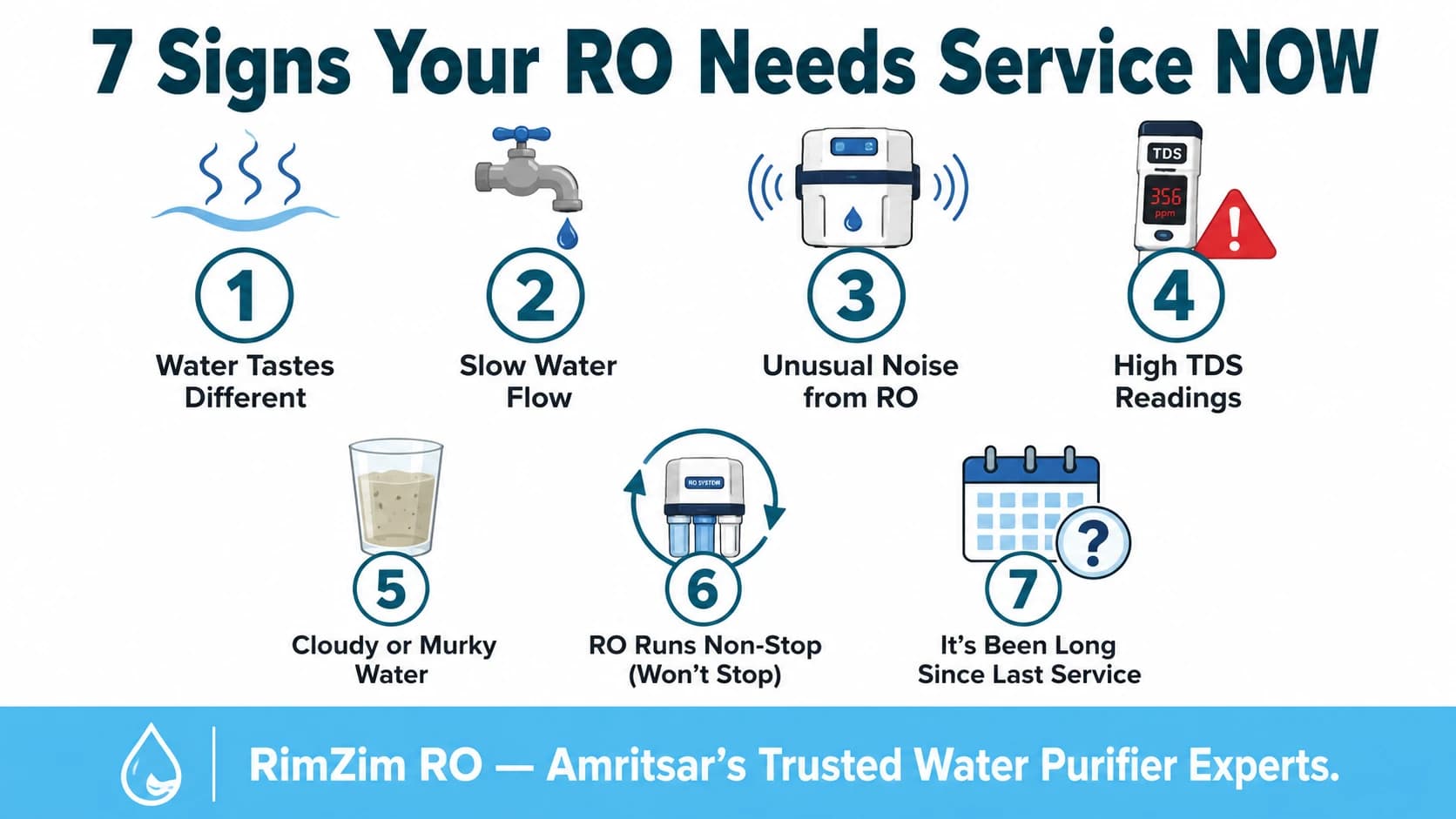
For groundwater, an RO system is not a luxury upgrade; it is a fundamental health requirement. However, because groundwater is so harsh, membranes degrade faster. It is crucial to watch for warning signs your RO purifier needs servicing to ensure dangerous heavy metals aren't slipping through an expired filter.
Scenario C: The "Mixed Supply" Problem
Many modern urban homes face a unique challenge: the water source changes. Your building might receive municipal water for three days a week, and rely on pumped groundwater for the other four days to meet demand.
If your TDS fluctuates wildly between 150 PPM and 800 PPM depending on the day of the week, standard systems struggle.
The Solution: Smart Hybrid RO Systems
For fluctuating water supplies, you need an RO + UV + MTDS (Manual TDS Controller) system. When the municipal supply is active, the TDS controller allows some water to bypass the harsh RO membrane, retaining natural minerals while still passing through the UV light for safety. When the groundwater kicks in, the system relies heavily on the RO membrane to strip out the excess heavy metals.
The Upgrade Debate: Copper vs. Alkaline Add-ons
Modern purifiers often feature "Alkaline" or "Active Copper" final stages. Are they worth it?
Alkaline Cartridges: Because RO membranes remove all minerals, the resulting pure water is often slightly acidic (pH 6.0 - 6.5). An alkaline cartridge reintroduces safe, measured amounts of calcium and magnesium back into the water just before it reaches your glass. This raises the pH to a healthier, neutral 7.0 - 8.0 and vastly improves the taste. Verdict: Highly recommended for all RO systems.
Copper Cartridges: Water stored in copper vessels is known for its natural antimicrobial properties and digestive benefits. Copper filters mimic this by infusing trace amounts of copper ions into the water. Verdict: A great wellness addition, but ensure the brand uses regulated, food-grade copper infusion.
Let Us Help You Choose
Never guess what's in your water. If you are unsure whether your home receives soft municipal water or hard groundwater, we can help.
- 🧪 Test Before You Buy: Book a free water quality check to get an exact TDS reading at your tap.
- 🛒 Browse Solutions: Explore our curated catalog of purifiers, ranging from zero-waste UV systems to heavy-duty RO models.
- 🔧 Need a Filter Change? Already have a system? Make sure it's actually working.
- 📞 Ask an Expert: Still confused? Contact our team today for personalized advice based on your neighbourhood's specific water profile.
Frequently Asked Questions
Article Insights & FAQs
More Insights
View All Stories
Need Expert Help?
Our certified technicians are ready to service your RO system and ensure pure water for your family.